
Jutti Colour Guide for Dandiya Night: How to Choose the Perfect Match for Every Lehenga
Day 1 — Royal Blue
Royal blue is cool, deep, and regal. Silver juttis are the natural companion — something with mirror work or delicate white thread embroidery that picks up the cooler tones in the outfit. Gold tends to push the look warmer than royal blue wants to go, so lean silver here.


Day 2 — Yellow
Yellow outfits are made for contrast. Hot pink or fuchsia juttis alongside a yellow lehenga is one of those combinations that sounds risky until you see it and then it makes complete sense. If contrast feels like too much, antique gold or mustard juttis keep the warmth going without competing.
Day 3 — Green
Green covers a wide range and the jutti shifts accordingly. Deep forest and olive greens sit beautifully with copper-toned or terracotta embroidered juttis for Dandiya night — earthy against earthy. Brighter greens call for gold to bring in the richness and warmth that stops the look from feeling too casual.


Day 4 — Olive-Green
Green is a more contemporary choice for Navratri and it gives you real creative freedom. It is one of those neutral bases that lets your juttis carry colour rather than the other way around. Electric blue, deep purple, or bright pink all pop against green in a way that looks styled and deliberate. If the lehenga has heavy silver embroidery, match the juttis to the silver and let the embellishment speak.
Day 5 — Orange
Orange is high-energy, warm, and completely at home on a Dandiya dance floor. Teal or deep green juttis create a contrast that feels considered rather than accidental. Gold juttis are the safer route and they sit naturally alongside the warmth of orange without any tension.


Day 6 — White
White at Dandiya is a confident choice, and it rewards the right footwear decision more than almost any other colour. The outfit is clean and simple which means the jutti carries more visual weight than usual. Go for something with real colour and real embroidery — deep red, cobalt blue, bright pink — and make sure the craftsmanship is visible. A white lehenga with a beautifully embroidered contrasting jutti looks genuinely professional.
Day 7 — Red
Red is the Dandiya classic and it has earned that status over generations of dance floors across India. Gold juttis with zari or thread embroidery are the traditional pairing and they work every single time without exception. For something that feels a little less expected, deep maroon juttis with gold detailing create a tonal layered look that is rich and quietly sophisticated.


Day 8 — Peacock Blue
Peacock blue photographs extraordinarily well and looks even better under the warm lighting of a Dandiya venue. Gold juttis are the obvious match — obvious because they genuinely work. For something with more personality, look for juttis for Navratri that carry the peacock colour story in their embroidery — teal, green, and gold together — rather than just repeating the blue.
Day 9 — Pink
Navratri ends in pink and it is the right colour to close nine nights of celebration on. Pink lehengas are forgiving and versatile — gold gives you the classic finish, silver gives you something cooler and more modern, and deep fuchsia juttis give you the full maximalist statement that last-night energy sometimes calls for. All three genuinely work. Go with whatever feels most like you.

Read more
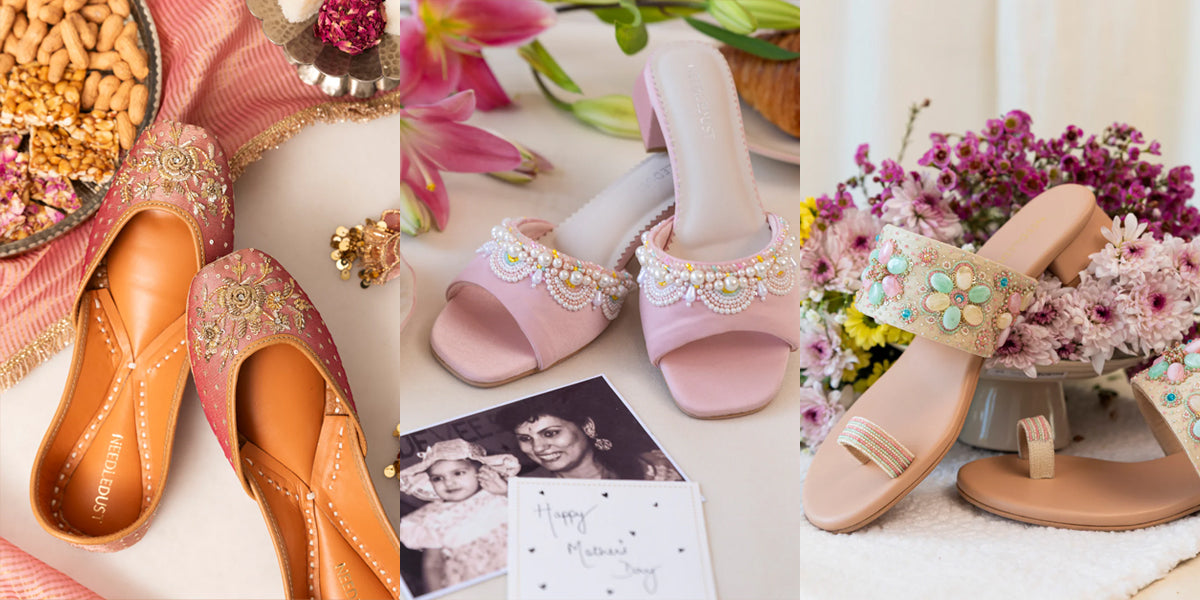
Celebrate Love with Luxury Footwear: Best Karwa Chauth Gifts for Wife
Karwa Chauth has a way of making everything feel a little more intentional. She woke up ...
Read more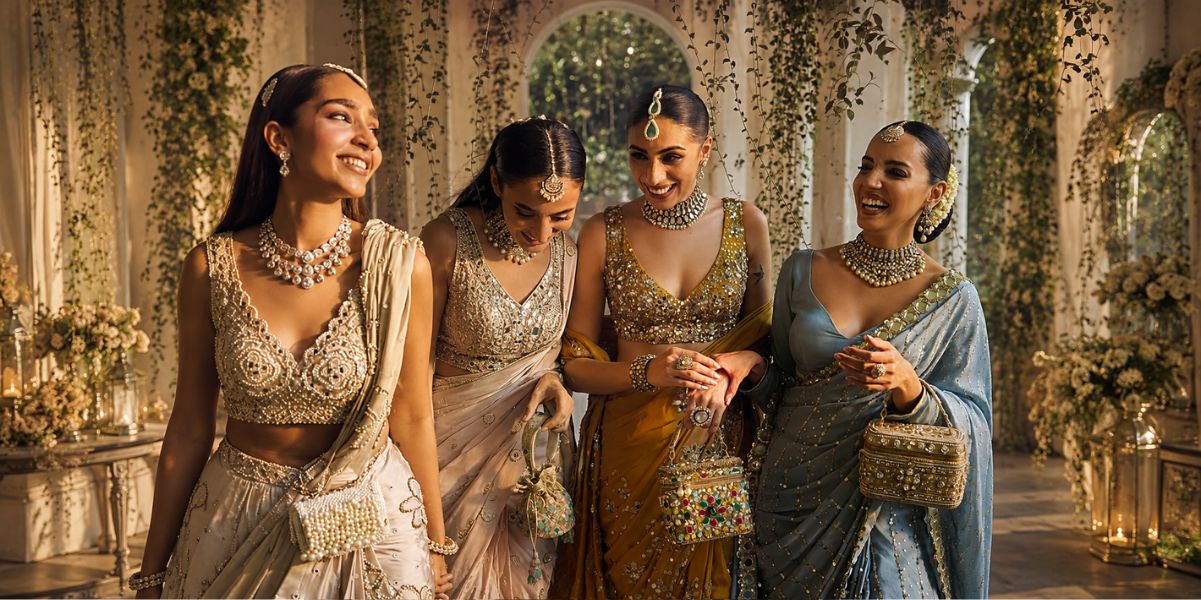
Bridal Purse Trends for Indian Weddings in 2026
Nobody really plans for the bridal purse. You spend months on the lehenga, weeks on the jewellery, and then...
Read more