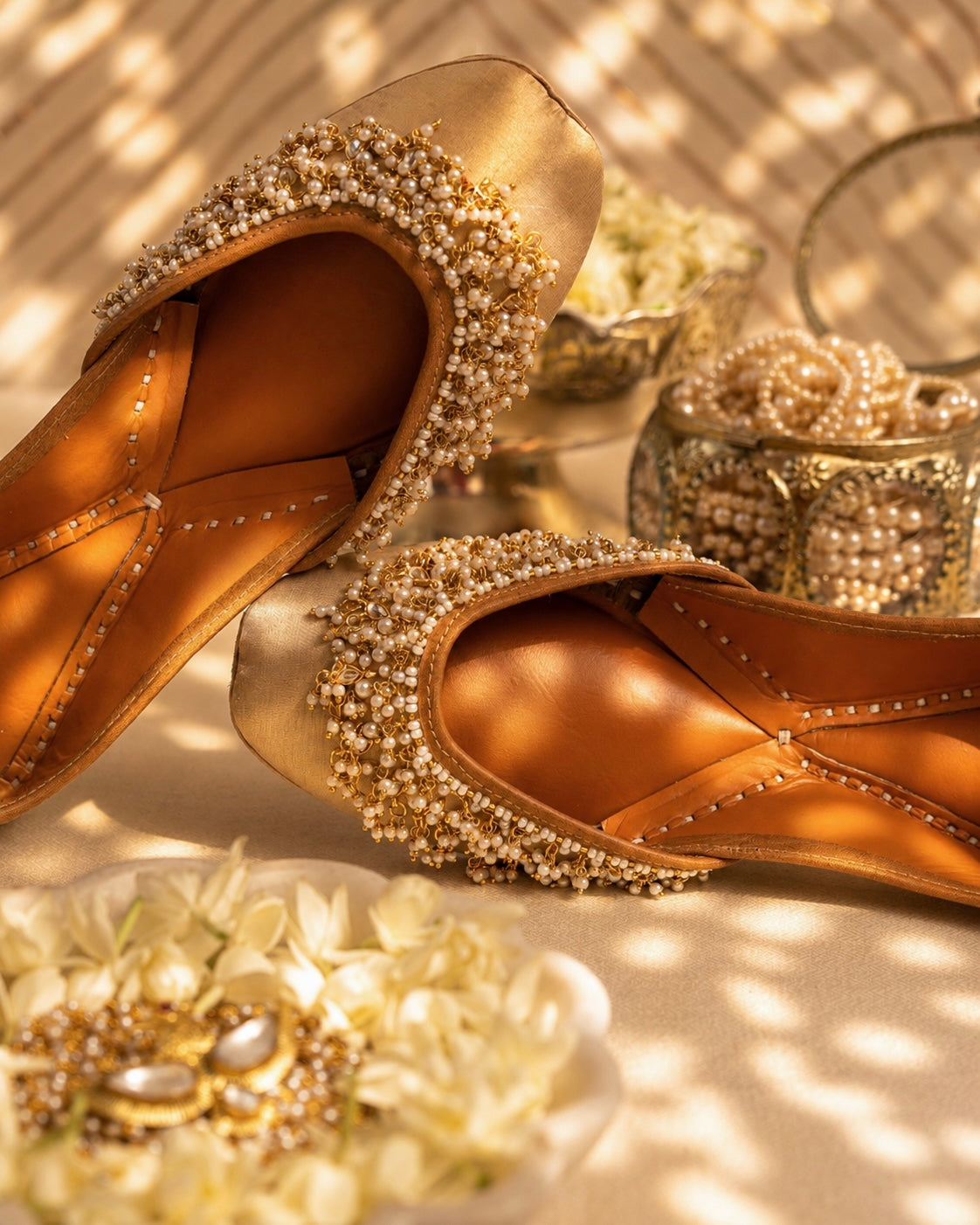
Explore Needledust Handcrafted Designer Juttis for Wedding Functions
At Needledust, we've noticed something over the years of dressing brides for their big day — footwear is almost always the last thing decided and the first thing that causes trouble. The lehenga gets finalised months in advance, the jewellery gets planned down to the last earring, and then the shoes get picked in a rush, days before the wedding. We started making these specifically because comfort and craftsmanship shouldn't have to be a trade-off, especially on a day that asks so much of a bride's feet.
Bridal footwear has to do two things at once — look as rich as the rest of the outfit, and actually hold up through pheras, sangeet dancing, and back-to-back photos without falling apart or leaving you limping. Getting both right isn't easy, and it's taken years of refining our craft to get there. It's also why, over time, brides and stylists alike have started calling Needledust the best designer brand for wedding juttis — not something we say lightly, but something we've earned pair by pair, wedding after wedding.
How We Think About Making a Wedding Jutti
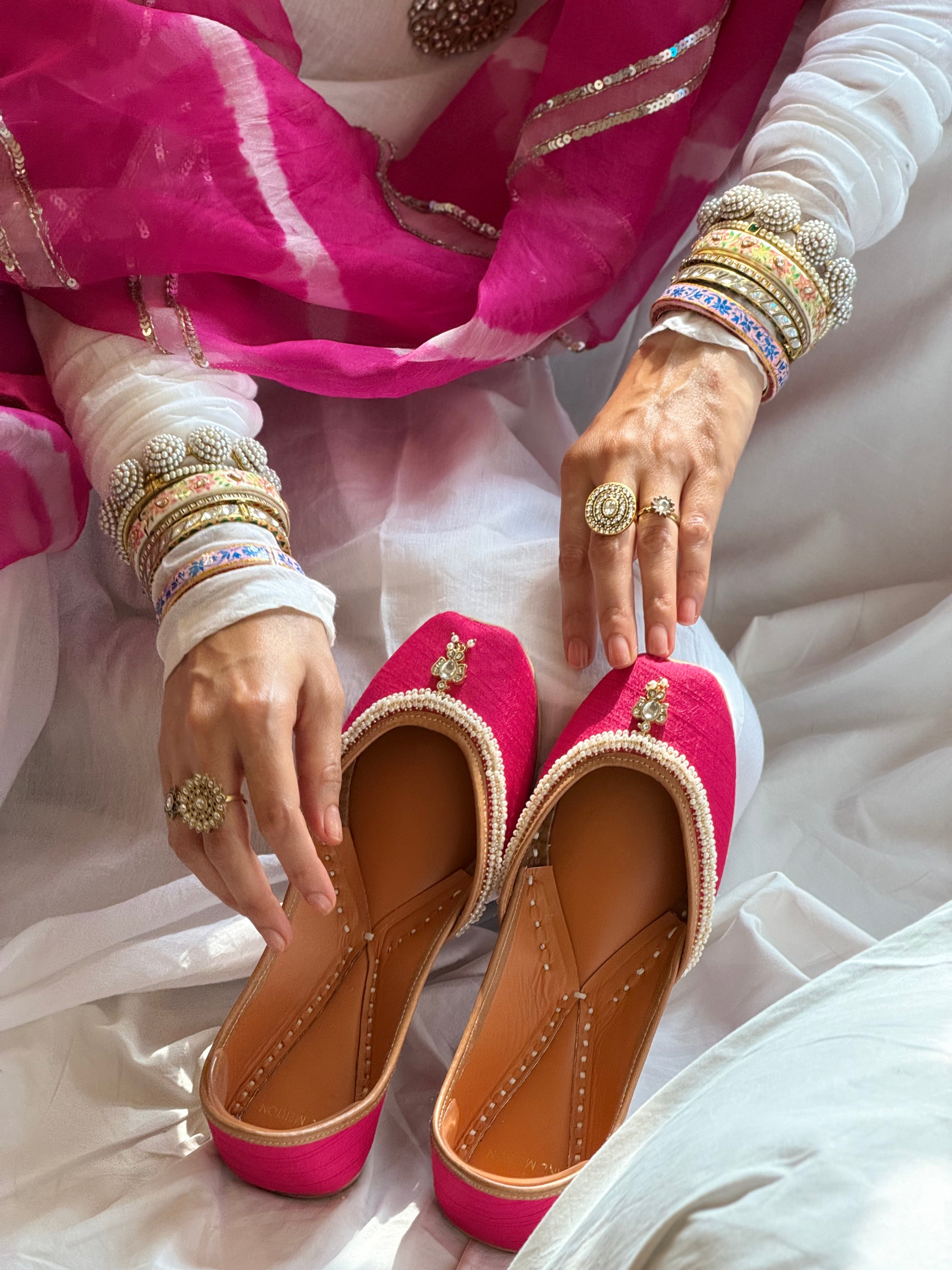
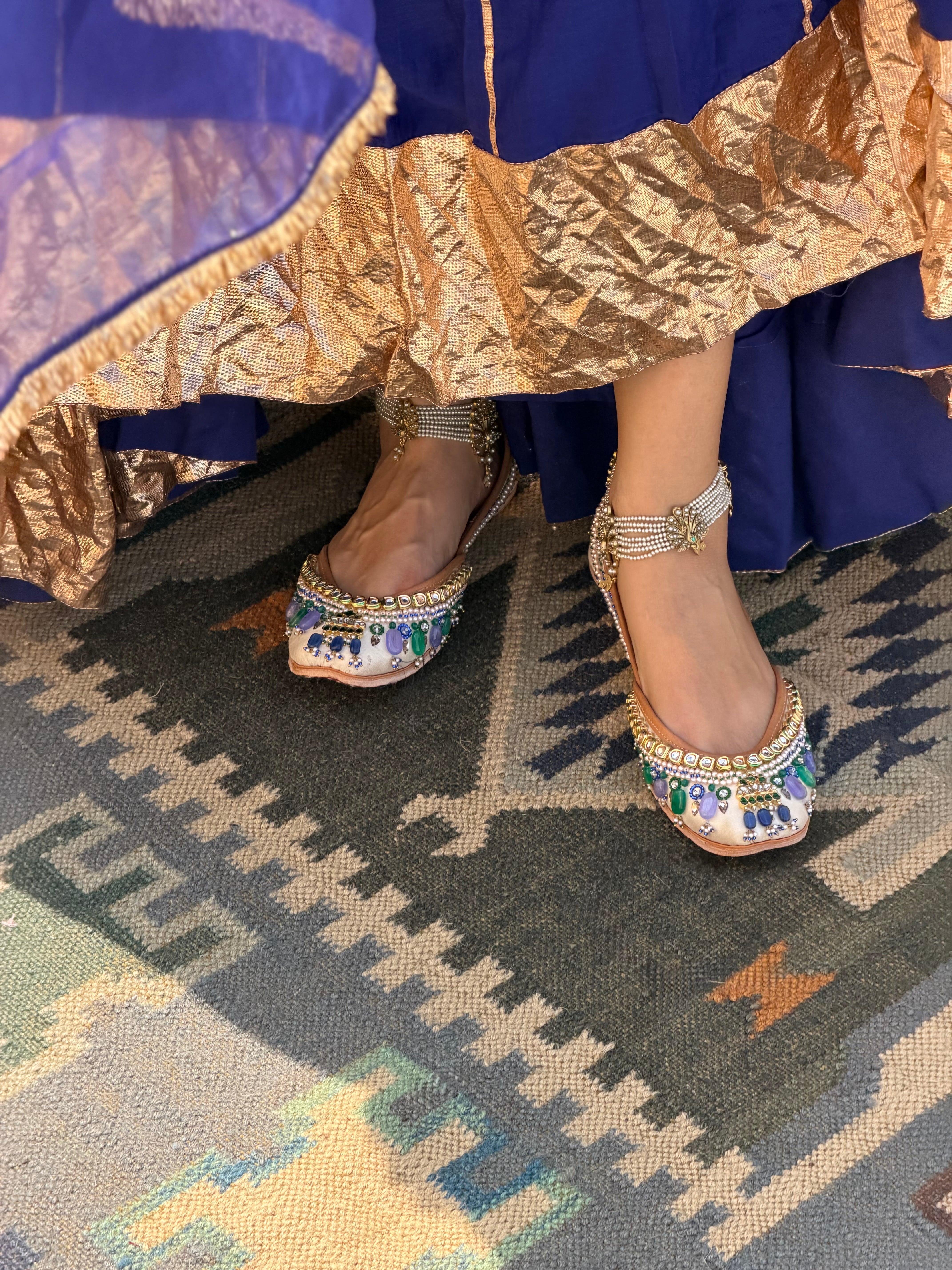
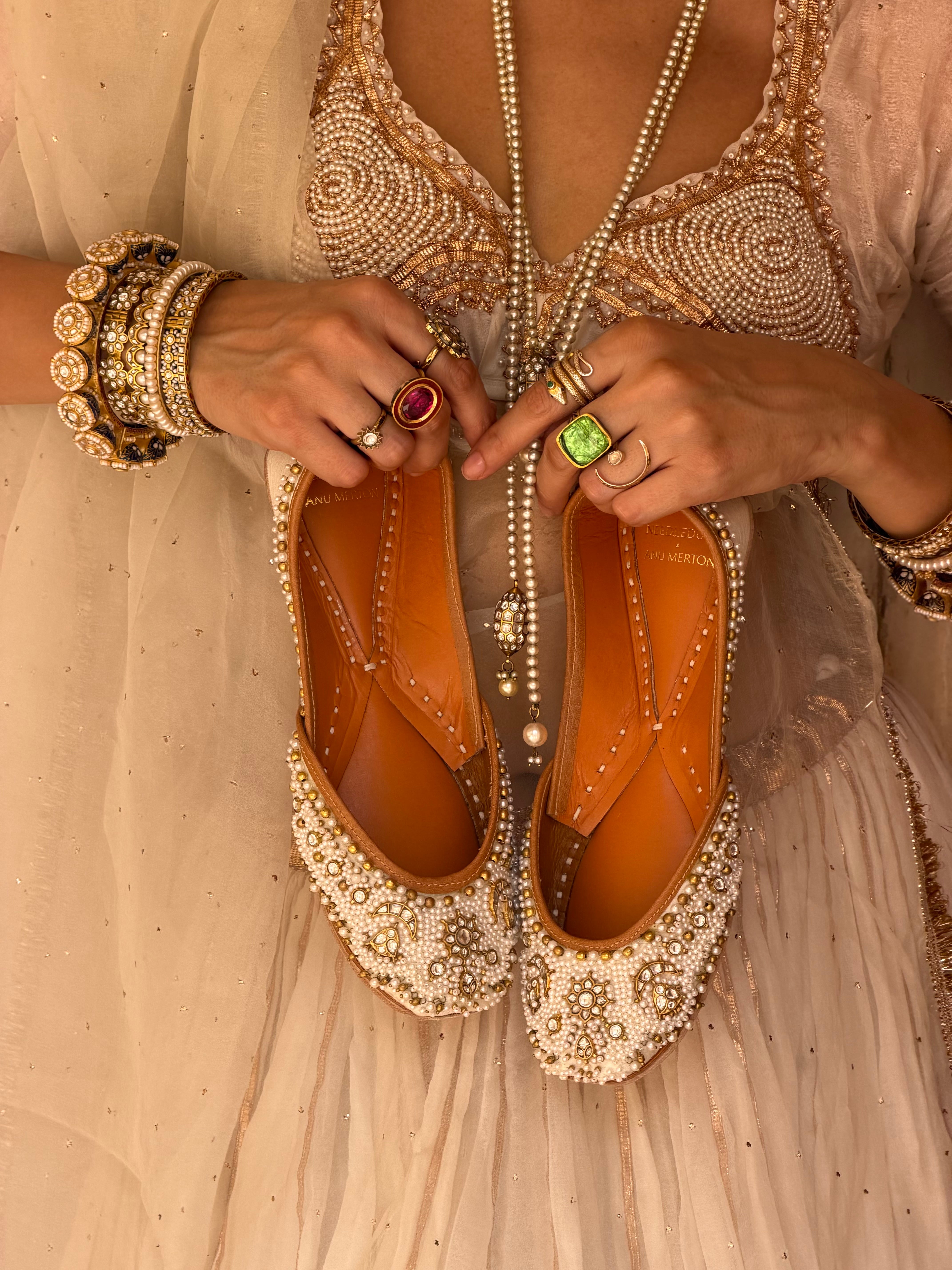
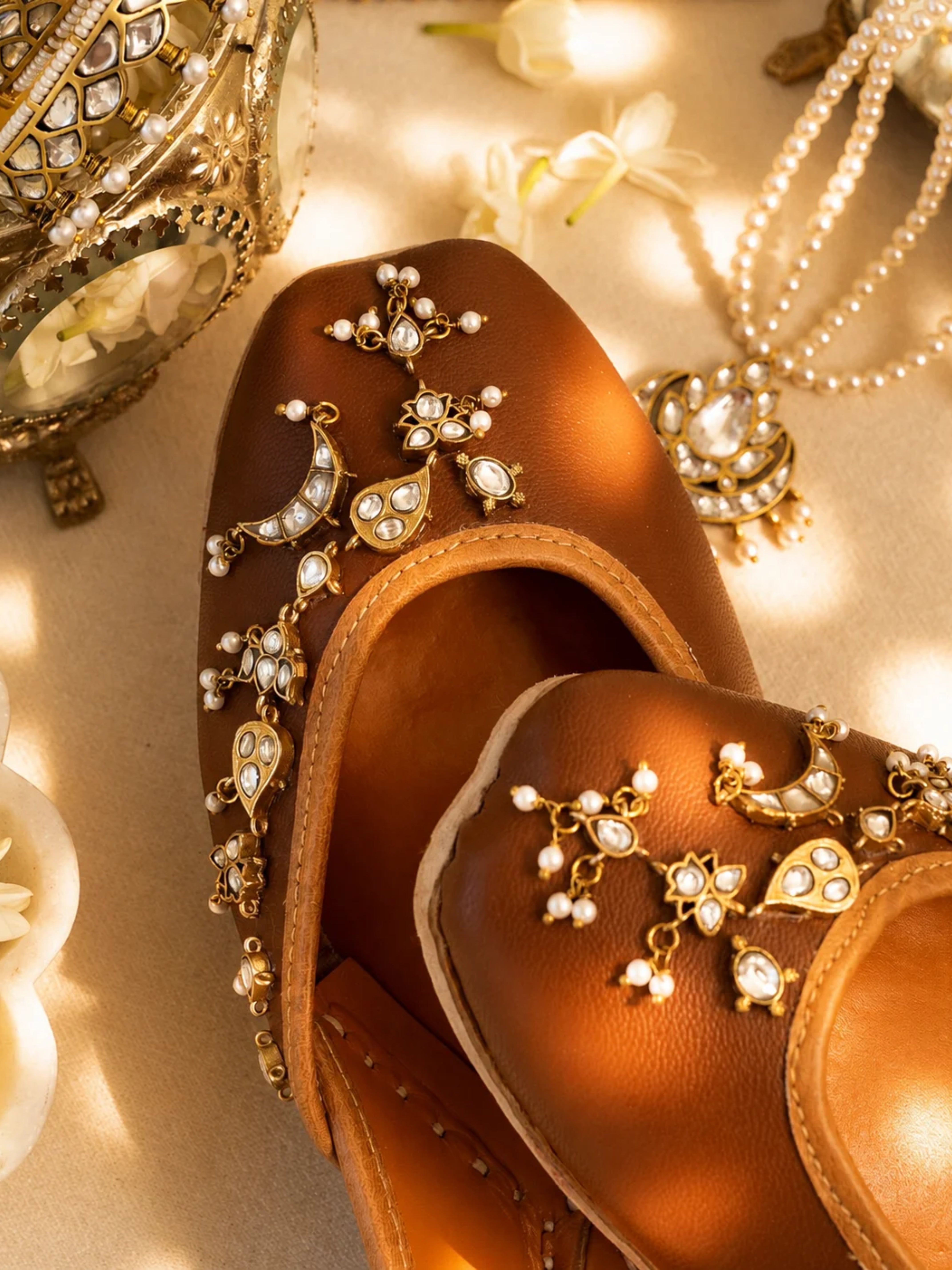
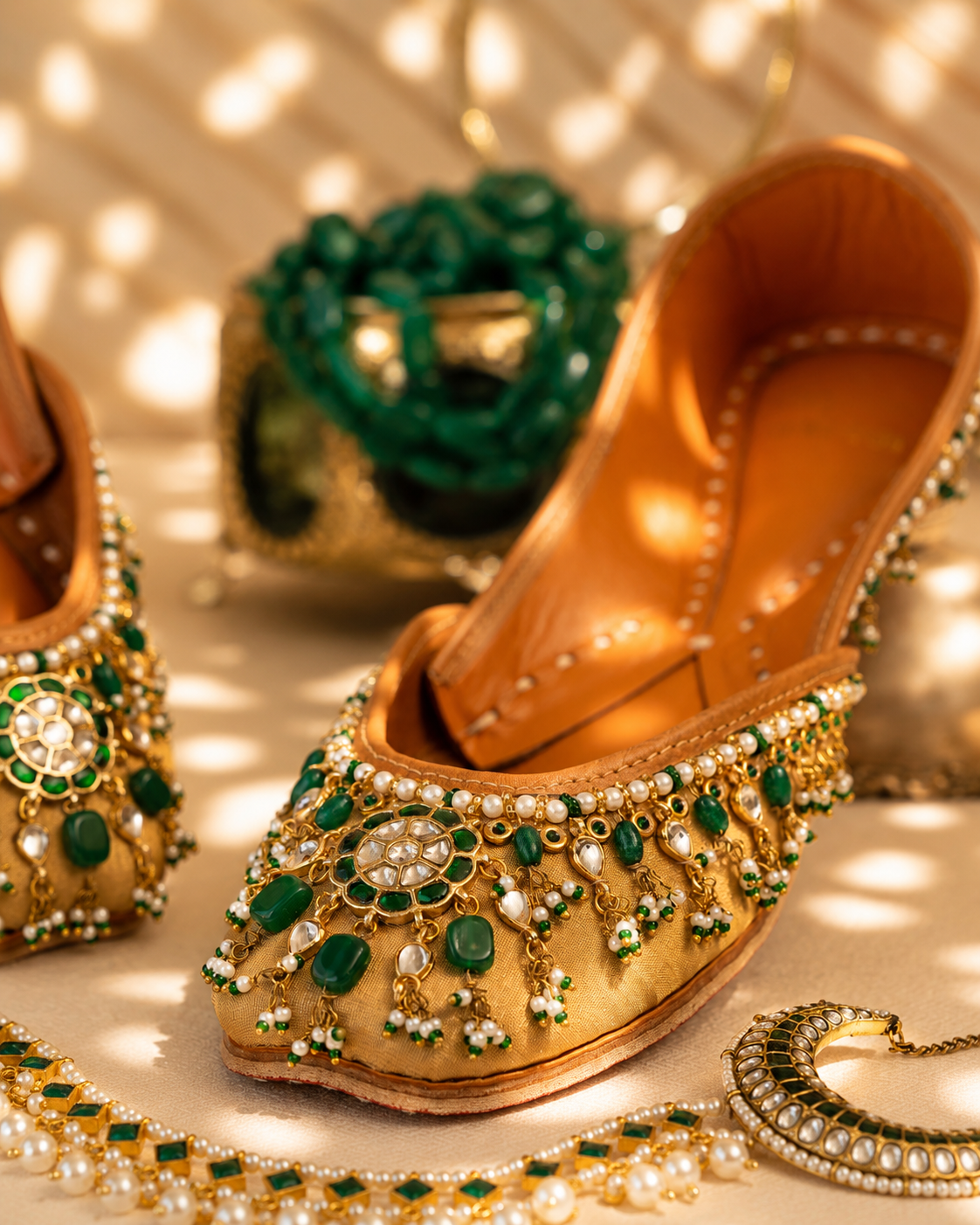
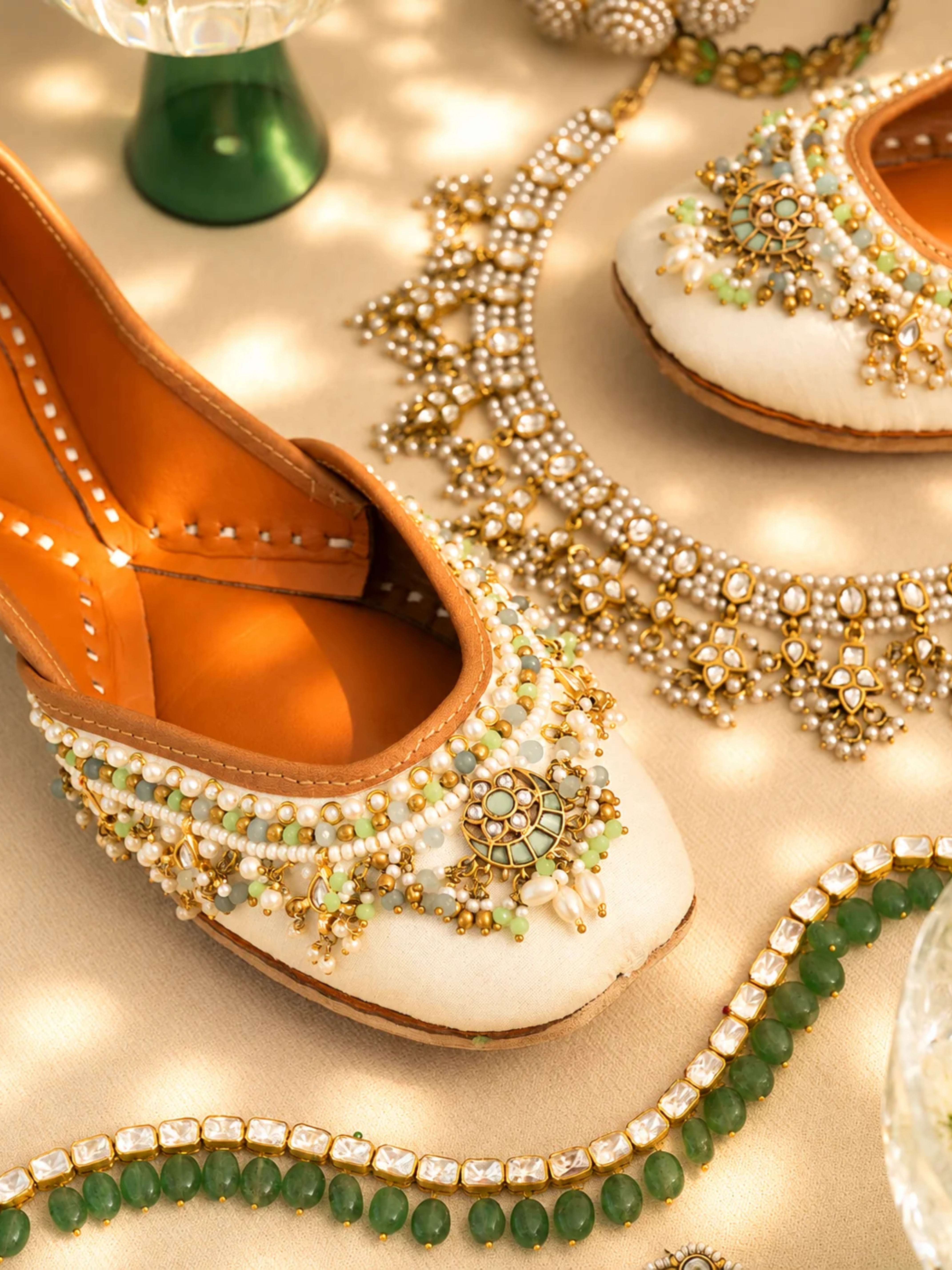
Every pair of wedding juttis we make starts with the embroidery, not the shape. Our artisans work with hand embroidery, zardozi, pearls, and sometimes crystal detailing, and depending on the design, a single pair can take several hours of handwork before it's even close to finished. We do this because machine embroidery just doesn't hold the same texture or catch light the same way — you can usually tell the difference within a few seconds of picking up a pair.
Comfort was the second piece we had to solve for. A lot of embellished juttis look stunning but are stiff and uncomfortable straight out of the box, which is a real problem when a bride is going to wear the same pair for six, seven, sometimes eight hours across one function. Our soles are cushioned and structured specifically so brides can actually dance in them at sangeet, not just pose for photos and then quietly change into flats.
Choosing the Right Wedding Jutti: What Actually Matters
Comfort before anything else. However beautiful a designer Jutti looks, if the insole is flat and hard, you'll regret it by hour four.
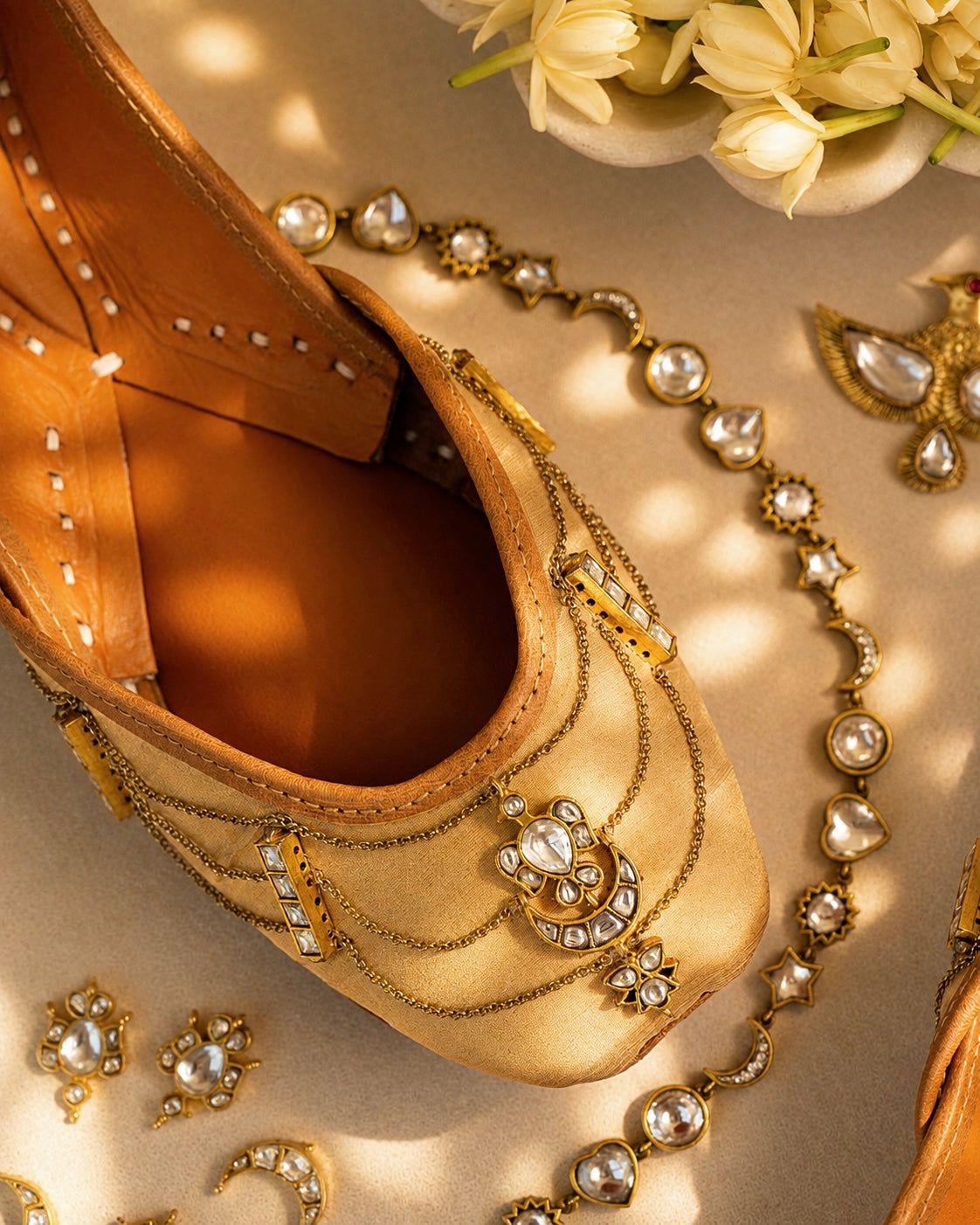
Embellishment that matches your outfit's weight. Heavy zari and pearl work for a traditional lehenga, lighter crystal detailing for something fusion, gota-patti if the function is more Punjabi in style.
Colours chosen by function, not just personal favourites. Ivory and gold work for the pheras, deeper jewel tones suit sangeet, and pastels sit better with haldi.
A size chart you actually check. Jutti sizing rarely matches regular shoe sizing exactly, and this is one of the most common return reasons we see.
Finishing that survives a camera. Wedding photographers love close-up shots of bridal feet next to the jewellery, so cheap embellishment shows up fast in the final album.
A Colour and Styling Guide Across Wedding Functions
Every function in an Indian wedding carries its own colour language, and we design our wedding edit around that logic rather than treating every jutti as interchangeable.
This is part of why a lot of brides end up shopping their entire footwear trousseau with us in one go rather than piecing it together from different stores. Our wedding jutti for bride collection is built so a bride can pick coordinated pairs for every function without worrying about quality dipping between one pair and the next.
Why We Keep Saying "Handcrafted" Instead of Just "Designer"
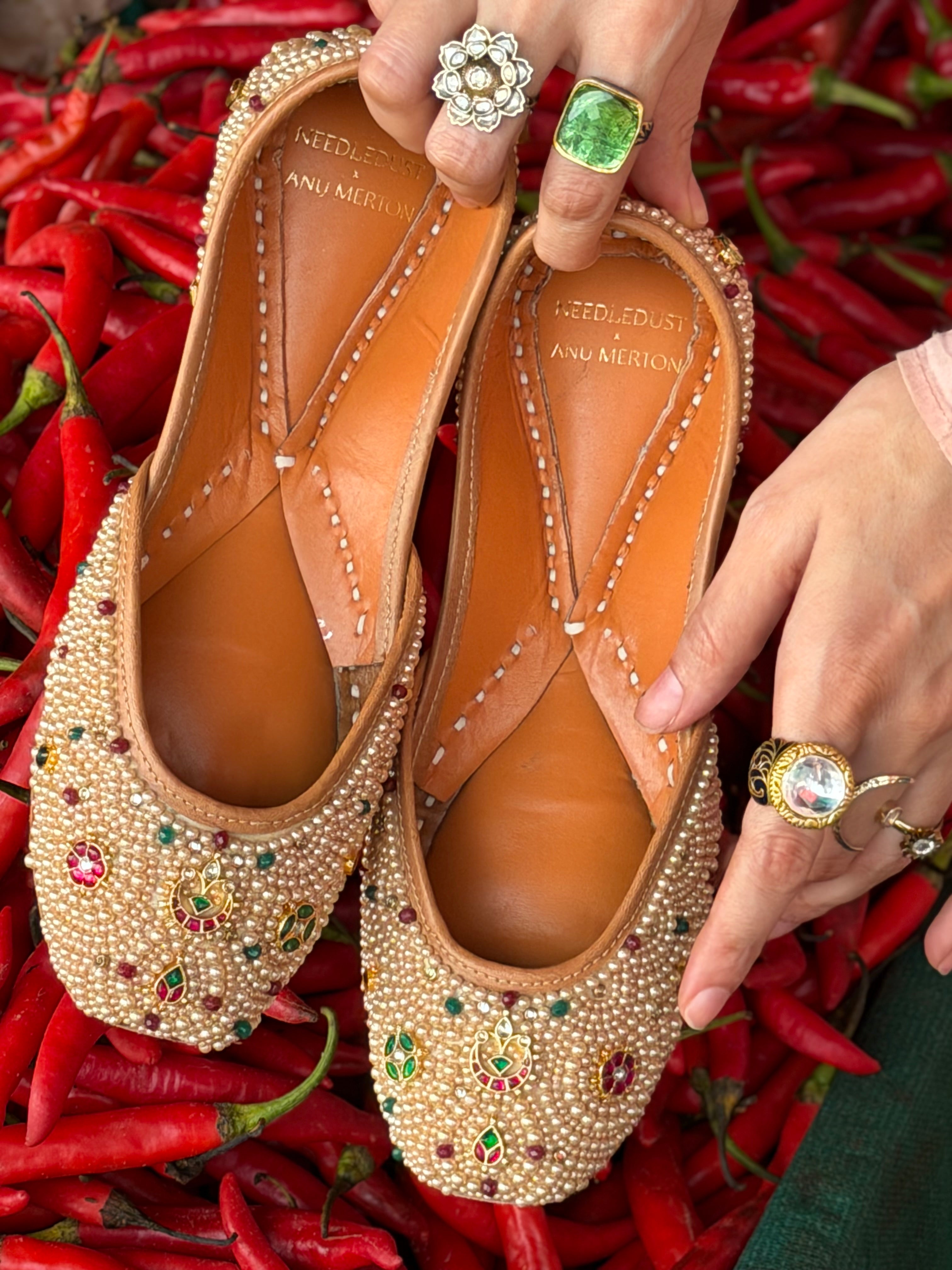
We use the word "handcrafted" deliberately, not as a marketing term. Every embellished pair goes through a karigar who places pearls, sequins, or zari by hand, one at a time, which is a slower and more expensive process than machine stitching — but it's also the only way to get embroidery that doesn't shed or fray after one night of heavy dancing. We've also worked on designer collaborations with names like Abhinav Mishra and Anu Merton, which tend to sell out quickly because they combine that same handcraft with a more editorial, runway-inspired design language.
If you're trying to figure out what makes a designer wedding juttis brand worth trusting, we'd say it comes down to three things: whether the craftsmanship stays consistent pair after pair, whether the shoe is still comfortable after six hours, and whether the brand actually covers every function instead of just one or two styles. We built our wedding edit specifically to hold up against all three.
A Few Practical Tips From Us to You
Wear your jutti around the house a couple of times before the wedding so the sole softens naturally.
Keep a simpler backup pair nearby for sangeet night if your main pair is heavily embellished — even the most comfortable jutti benefits from a break during hours of dancing.
Match the metallic tone of your jutti to your jewellery, not just your outfit colour — gold jutti with gold jewellery photographs far better than gold jutti against a random outfit shade.
If you're changing outfits multiple times on the wedding day, a neutral ivory or gold pair usually carries you through two or three looks without anyone noticing the repeat.
Store your juttis in soft cloth pouches after the wedding, not plastic. Pearls and threadwork lose their shine faster in plastic packaging.
In Closing
A wedding jutti isn't a small decision, even though it often gets treated like one. It's something you'll be standing and dancing in for hours, across some of the most photographed days of your life, so it deserves the same care that goes into choosing a lehenga or a piece of jewellery. That's the belief we've built our wedding collection around — handcrafted embellishment that doesn't compromise on comfort, in colours and styles that cover every single function from haldi morning to reception night.
Frequently Asked Questions
1. What exactly is a wedding jutti?
A wedding jutti is a traditional Indian slip-on shoe, hand-embroidered with pearls, sequins, or zari work, worn by brides and grooms across wedding functions. We design ours to cover almost every function on the wedding calendar, from haldi to the reception.
2. How is a wedding jutti different from an everyday jutti?
Wedding juttis use richer embellishment, better fabrics, and bridal colours like ivory, gold, and red, while everyday juttis are simpler and meant for regular festive wear. We keep both lines but design our wedding pieces with heavier handwork specifically for bridal occasions.
3. Which colour should I wear for the wedding day itself?
Ivory, gold, and red remain the safest and most popular choices for the pheras, since they complement most bridal lehengas and photograph well under warm venue lighting. Our bridal ivories and golds are designed with exactly this kind of photography in mind.
4. Can I actually dance in these for hours, or are they just for photos?
Yes, if they're made properly. We build our juttis with cushioned insoles specifically so brides can get through long ceremonies and full nights of sangeet dancing without discomfort creeping in.
5. Should I wear the same jutti for haldi and mehendi?
We'd recommend against it. Haldi suits lighter yellows and ivories, while mehendi works better with greens, corals, or mirror-work styles. Our wedding collection is organised by function to make this easier to plan.
6. How do I get the sizing right when ordering?
Please don't rely on your regular shoe size — jutti sizing can run narrower or wider depending on how it's handcrafted. We list detailed size guidance on every product page for exactly this reason.
7. What accessories pair well with a designer wedding jutti?
Kundan or pearl jewellery, dupatta pins, and a matching potli bag or clutch generally work well. We'd suggest keeping the metallic tone — gold or silver — consistent between the jutti and the jewellery for the best look.
8. Why do people consider Needledust one of the best designer wedding juttis brands?
We think it comes down to consistency — handcrafted pearl and zardozi work, soles that stay comfortable through long functions, and a range that covers every part of the wedding calendar. We've also worked on designer collaborations with Abhinav Mishra and Anu Merton for brides looking for something more exclusive, which has helped build that reputation over time.