
How to Style Designer Juttis and Purses for Diwali Celebrations: A Complete Festive Guide
Every Diwali has the same small ritual. The lehenga or sari is laid out on the bed, the jewellery box is open, and then comes the question that decides the whole look: what do I wear on my feet, and what do I carry?
Footwear and bags get chosen last, but they carry a festive outfit. Diwali means hours of standing at pujas, touching elders' feet, hosting relatives, dancing at the party and climbing stairs to the terrace for diyas. You need shoes you can survive in and a bag that holds your phone and lipstick without breaking the look.
That is where designer juttis and purses earn their place. Here is how to style both for Diwali, using pieces from Needledust's Anu Merton collection.
Why Designer Juttis Suit Diwali
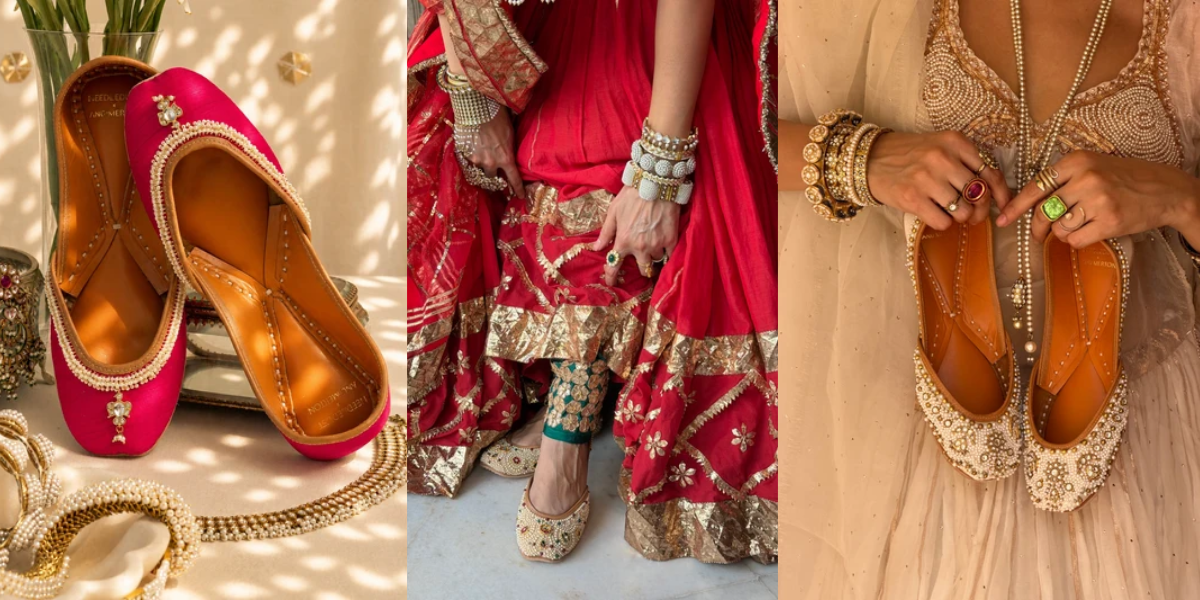
Juttis are rooted in Indian craft, and they photograph beautifully against silk, tissue, zari and brocade. Designer juttis add the embellishment of fine jewellery, so your feet become part of the outfit instead of an afterthought.
Comfort matters just as much. Needledust juttis are double-padded on the inside, which helps when Diwali night stretches from the evening puja to a late dinner. If you're hunting for designer juttis for Diwali, look for three things: rich detailing that catches diya light, a shape that works with Indian silhouettes, and cushioning you can trust.
Designer Juttis for Diwali: Four Styles to Consider
1) Huzoor: for the jewellery lover
The Huzoor Jutti has a trailing bel of kundan tukdhis, faux pearls and gold-finished accents across the upper, inspired by traditional jadau work. It sits on a warm tan base, and the placement of the embellishment is asymmetrical, which gives it a sense of movement.
The tan base keeps it easy to wear. It won't fight your outfit, so all the attention goes to the detailing. It works with tissue saris, festive co-ords and tonal shararas. That flexibility matters if you're dressing for a daytime lunch and an evening puja on the same day. Note that the upper is vegan leather.

2) Raanjha: for understated elegance
Not everyone wants heavy sparkle, and the Raanjha Jutti suits that mood. Made in Indian tissue, it has delicate metallic chain detailing that fans out in arches towards a handcrafted kundan centrepiece, with geometric kundan accents on the sides.
If you're wearing a Banarasi silk or a tissue sari in a single colour, this is the one. It adds polish without competing with your outfit, and it's the most affordable of the four.

3) Heeriye: for full festive richness
The Heeriye Jutti goes the other way. It's built in Indian tissue with kundan tukdhis, faux pearls and gold-toned links, and layers of hand-linked pearl clusters give it real texture and depth. It looks like a piece of regal jewellery.
Pair it with a heirloom sari, a gold-toned lehenga or a richly embroidered festive suit. If you're hosting the Diwali party or dressing for a wedding-style celebration, this is your showstopper.

4) Memsaab: for the bold pick
The Memsaab Jutti is the most premium of the group. It's the one to choose if you want your footwear to be the thing people notice. It also comes in a matching batua purse, which I'll get to below. If you like the idea of a coordinated set, you can buy the pair and skip the hunt for a match. For the fullest details on this one, check the product page.

Juttis for Diwali Party Looks: A Few Styling Ideas
The Diwali party has its own dress code. It's dressier than the family puja and more playful than a wedding. A few pairings work well:
- Pastel or ivory sari + Raanjha. Soft, elegant, a good match for a candlelit dinner.
- Deep jewel tones (emerald, maroon, midnight blue) + Heeriye. The gold and pearl detailing picks up your jewellery, and the outfit looks intentional.
- Indo-western co-ord or sharara + Huzoor. The tan base keeps things modern, and the kundan work dresses up a simple outfit.
- Anarkali with heavy embroidery + Raanjha. When the outfit does the talking, keep the footwear refined.
One rule I'd give any friend: let one element lead. If your blouse or dupatta is heavily worked, choose the quieter jutti. If your outfit is plain, let the jutti be the statement.
Designer Purses for Diwali: The Batua Is Having a Moment
A large tote doesn't suit a festive outfit, but you still need somewhere to put your phone, keys, cards and lip colour. The batua purse is the traditional answer, a small drawstring pouch that feels made for Diwali. It frees your hands for diyas, sweets boxes and gifts, and it's a lot less awkward than a clutch you keep putting down.
1) Memsaab Batua: the matching set
The Memsaab Batua Purse is designed alongside the Memsaab jutti, so the two are made to be worn together. If you want a coordinated look without hunting for a match, this is the easiest route. Matching accessories make an outfit look planned rather than pieced together. It's worth considering for the main Diwali night, when the photos will be taken. You get one polished, cohesive look from your feet to your hand.

2) Soni Batua: the investment piece
The Soni Batua Purse is the most premium bag here. It suits someone who wants one statement accessory that will outlast the festive season. Diwali, wedding season and the anniversary party in December can all share it. Because it works across so many occasions, the cost per wear comes down quickly. Pair it with a simple outfit and it will carry the whole look.

3) Sanam Gold Micro Batua: small and sparkly
The Sanam Gold Micro Batua Purse is the smallest in the set. A micro batua holds the essentials and little else, which is the point. It's ideal for the Diwali party, where you want to travel light. Gold works with almost any festive palette, so it pairs easily with what you already own. It also keeps your hands free for dancing, photos and plates of mithai.

Putting the Full Look Together
Here are three complete combinations:
- The traditionalist: Heirloom silk sari, Heeriye jutti, Soni batua. Rich, layered, very Diwali puja.
- The minimalist: Tonal tissue sari or kurta set, Raanjha jutti, Sanam Gold micro batua. Clean and quietly luxurious.
- The modern host: Festive co-ord or sharara, Huzoor jutti, Memsaab batua. Relaxed enough to move around your own party, dressy enough for the photos.
A tip on colour: match the metals. If you're wearing gold jewellery, choose gold-toned detailing on your jutti and bag. It makes the whole look feel cohesive.
Practical Notes Before You Order
- Order early. The listed dispatch time on these juttis is around nine days, and Diwali falls in early November. Ordering now leaves room for sizing questions.
- Check your size. Sizes run from 36 to 41, and there's a size chart on each page. If you're between sizes, Needledust's team can help.
- Consider heel shields. They're an optional ₹299 add-on and useful if you'll be walking on marble or outdoors.
- Care for them properly. These are dry clean only. Store them in the dust bag or a muslin cloth, and keep them away from moisture.
- Gifting? Pairs arrive in a hard-cover box wrapped in butter paper, with a care card and dust bag, and you can add a greeting card at checkout. Juttis and batuas both make lovely Diwali gifts.
Conclusion
Diwali is about light, family and the pleasure of dressing up, and the details make an outfit feel complete. A jutti with handcrafted kundan work and a batua that holds only what you need can lift a simple sari or lehenga into something memorable.
Whether you choose the jewellery-inspired Huzoor, the restrained Raanjha, the pearl-rich Heeriye or the statement Memsaab, the aim is the same. Wear something beautiful, and comfortable enough that you forget it's on your feet. Then pick a purse that lets you carry a diya in one hand and a sweet box in the other.
FAQs
1. What kind of jutti is best for Diwali puja?
Pick a pair that stays comfortable through long hours of sitting, standing and touching elders' feet. The Raanjha is a lovely choice, with its soft tissue base and understated kundan centrepiece. It looks graceful with silk and tissue saris without feeling too heavy. If you want a richer look for the main puja day, the Heeriye is a beautiful step up.
2. Can I wear designer juttis with Indo-western outfits?
Absolutely, and it's one of the easiest ways to dress up a modern look. The Huzoor has a warm tan base with kundan and pearl detailing, so it sits nicely with festive co-ords and tonal shararas. It gives a simple outfit a touch of jewellery without making it look too traditional. You get the Diwali feel while still looking current.
3. Which jutti is best for a Diwali party?
For an evening party, the Heeriye is the one that gets noticed. Its layers of hand-linked pearls and kundan catch the light beautifully under diyas and fairy lights. If you'd like something a little more flexible, the Huzoor works just as well and pairs easily with different outfits. Both feel dressy enough for the occasion.
4. How do I choose between a batua and a micro batua?
Think about how long you'll be out and what you need to carry. A regular batua gives you a bit more room, which is handy for a full day of pujas and family visits. A micro batua fits just the basics, like your phone and lipstick, so it's perfect for a party where you want to stay light. Choose the size that matches your day, not just your outfit.
5. How do I match my purse to my jutti?
Don't stress about matching the exact colour. Focus on keeping the metal tones and the overall mood similar, so gold detailing goes with gold jewellery and a rich jutti goes with a rich bag. If you'd like an easy shortcut, the Memsaab jutti and Memsaab batua share a name and make a natural pair. Just check both product pages to make sure the colours suit your outfit.
6. How should I care for embellished juttis?
These are dry clean only, so keep them away from water. After each wear, store them in the dust bag or a muslin cloth that comes with the box. If they get exposed to moisture, let them dry for a few hours before putting them away. A little care keeps the embellishments looking fresh for many Diwalis.
7. Are these designer juttis comfortable for long wear?
Yes, they come with double-padded cushioning inside for extra comfort. That helps a lot on a long Diwali day when you're on your feet from morning puja to late-night dinner. If your feet are extra sensitive, Needledust suggests lining the inside with mustard oil for a day and then leaving it. A heel shield is also available for a small extra charge.
Read more
5 Best Designer Karwa Chauth Juttis to Pair with Your Festive Indian Wear
Two days before Karwa Chauth, the outfit is usually sorted. Mehendi's booked. And then somehow you're still standing in front of your shoe rack at 11pm, unimpressed by lit...
Read more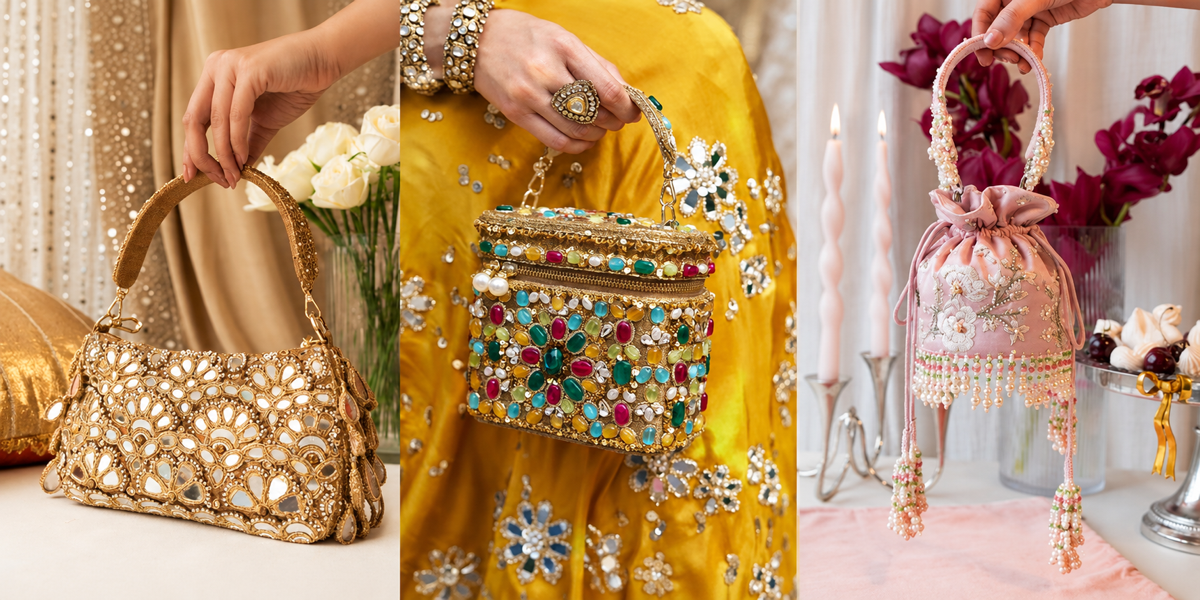
Best Indian Designer Purse Brand for Weddings and Festive Occasions
Every wedding season in our homes starts the same way. The lehenga is finalised, the ...
Read more